|
|
| Line 53: |
Line 53: |
| *'''Due: Tuesday, January 26''' | | *'''Due: Tuesday, January 26''' |
|
| |
|
| == Rationale: Blue/green infrstructure-connecting the historic centre with the national park == | | ==='''[[Collaborative Green Infrastructure Design Group C|Collaborative Design Working Group C]]'''=== |
| | |
| ''The river of Tirana is located between the historic centre and the National Park of the Paskuqani in northern part of the city. It is one of the 5 developing poles of the multicentric masterplan of the city approved in 2012. The population is expeted to increase during the next years, according to the demographic data and this fact makes the river`s zone a potential area of high density and multifunctionality in the future. The landscape is shaped mostly by natural and seminatural features like hills, the river and the park. Currently informal buildings, waste pollution and low mantainance of ecologic environment has become a very big problem to solve. It is an emergency to approach the future development of the area based on a well integrated green/blue infrastructure project since nothing has been done in this aspect and planning is always a better choice than improving when is too late.''
| |
| | |
| == Author's perspective ==
| |
| ''
| |
| | |
| I have a master degree in urban planning and a background in architecture. The area of the study case is located in the city where I have spent 12 years living. Beside that, my master thesis project was near the river of Tirana´s zone but my approach was focused on the southern part of it and on the new residential buildings proposal.''
| |
| | |
| == Landscape and/or urban context of your case ==
| |
| | |
| *''Biogeography, cultural features, overall character, history and dynamics
| |
| | |
| | |
| ''' Overview of the city '''
| |
| | |
| Tirana, the capital of Albania, is situated 40
| |
| kilometers from Durres, the largest port in the
| |
| country and 26 km from Mother Theresa
| |
| International Airport. It is the largest city, with an
| |
| increasing population, with an average annual
| |
| growth rate of 3.77% from 2001–2009 (INSTAT,
| |
| 2009). The faster urbanization influences the city's
| |
| development, the living environment and the socioeconomic
| |
| situation.Tirana has the opportunity to be regenerated
| |
| itself after a long term of isolation.
| |
| Exists a lot of informality in the northpart of the city,
| |
| but this informality is supposed to be the shelter for
| |
| those persons who live there.
| |
| | |
| | |
| | |
| [[Image:Historical evolution.jpg|right|430px|]] | |
| | |
| ----
| |
| | |
| | |
| '''Biogeography of the area'''
| |
| | |
| Tirana‟s contact with water is concretized in two
| |
| lakes (one in north and the other in south) and two
| |
| rivers (Tirana River and Lana River) that run parallel
| |
| to each other, between the two lakes. The actual
| |
| condition of the Tirana River waterfront is weak and
| |
| the regeneration of it is an important issue for the
| |
| development of the city.
| |
| | |
| | |
| | |
| Its north-south axis, which eventually corresponds
| |
| to the main boulevard of the city, serves as a
| |
| connector between the lakes and the rivers.
| |
| Existing general land use of the area
| |
| under study and identification of the water surfaces
| |
| of Tirana city. (Source: GrimShaw analysis and Dar
| |
| analysis for Tirana Masterplan 2012)
| |
| “Tirana in the XVI century was defined by a
| |
| building mosque, a hammam and a bakery,” (Aliaj,
| |
| Myftiu & Lulo, 2003). So, water was not the most
| |
| important factor in the foundation of the city, but it
| |
| was one of the natural resources affecting the
| |
| growth of its early settlements and melding its
| |
| future. In the actual situation, there do exist a close
| |
| relationship between the water and the city.
| |
| Like other natural elements (Dajti Mountain, hills,
| |
| agriculture etc.) water influences the urban
| |
| development and the stratum of the urban fabric.
| |
| | |
| The urbanization process happens on
| |
| both sides of the Lana and Tirana River, around
| |
| lakes. Tirana‟s green regions are strengthened by
| |
| the topography besieging the urban superficies, the
| |
| streets, the habitation areas etc. The source of Tirana River is in the mountains to
| |
| the east. It flows to west through the northern area
| |
| of the city. In the mountains, it flows through the
| |
| protected area of Dajti Mountain, providing an
| |
| ecological corridor, through which wildlife can
| |
| extend and survive. Its estuary is 30-40 km to the
| |
| north-west at Rodon Bay, on the Adriatic coast. The
| |
| topography of Tirana from east to west is
| |
| nearly 1% slope. The existing natural movement
| |
| results fast during periods of rainfall, which
| |
| combined with coarse sand and cobbles by the
| |
| mountains located close, becomes a destructive
| |
| force.
| |
| | |
| ----
| |
| | |
| | |
| After the centralized society dropped to the market
| |
| economy in the ‟90s, Tirana, as many other postsocialist
| |
| cities of Europe, experienced an extensive
| |
| growth by the congestion of the new population that
| |
| settled in the periphery of it, which was not well
| |
| incorporated into the urban life of the city.
| |
| This decentralized action induced spontaneous
| |
| settlement by the citizens, with their own resources,
| |
| the same as it did in different places of the world,
| |
| including Bogota, Bombay, Caracas etc., which
| |
| suffer from a high percentage of informality. In
| |
| Tirana, the social and spatial pattern viewpoint of
| |
| the phenomena is little investigated.
| |
| | |
| | |
| ----
| |
| | |
| The informal settlements (Kamza, Bathore and
| |
| Paskuqan, the three major informal housing
| |
| settlements around Tirana, with over 90% of the
| |
| dwellings constructed illegally), grew mainly in the
| |
| early 2000, in suspicious and poor conditions. This
| |
| gave birth to an “informal city”, which was not
| |
| acknowledged by the authorities, a self-made
| |
| structure by rural immigrants which saw Tirana as a
| |
| better opportunity for their familiar and future life.
| |
| This city grew without planning control, creating a
| |
| spatial and cultural disconnection with the existing
| |
| urban situation. The consolidation of the “selfadding-
| |
| process” raises the problems of social injury
| |
| which needs to be resolved. The sustainable
| |
| development of these areas, the integration and
| |
| consolidation need a better understanding of these
| |
| problems, to go to the final solutions. “The
| |
| segregation involves spatial separation of
| |
| population groups and spatial separation reduces
| |
| interaction among groups over space” (Newby,
| |
| 1982).
| |
| | |
| ----
| |
| | |
| '''The existing condition of the Tirana river waterfront'''
| |
| One of these informal areas is that of the North
| |
| Tirana (Tirana River area near Paskuqan). The
| |
| current ecological situation of the urban Tirana River
| |
| demonstrates waterways and aquifers, poor waste
| |
| management, contaminated land, deforestation and
| |
| sporadic urbanization. Ecologically it is poor. As the
| |
| European and world's experience shows, many of
| |
| the nowadays healthy river waterfronts, were
| |
| polluted in the past, so the chances for reversing the
| |
| natural state are high.
| |
| “The peculiarity of Tirana stands in the fact that
| |
| post-socialist socio-spatial transformations are
| |
| better defined by Balkanization (implying
| |
| individuality and hostility) rather than segregation
| |
| (which implies clustering)” (Nase, Ocakçi. 2010).
| |
| The public space is missing, as it is made property
| |
| of the individuals which are settled in the area,
| |
| property of each one alone, not along with the
| |
| others. These individuals are interested in what
| |
| evolves inside the fence of their houses and feel like
| |
| lose character outside these borders. This kind of
| |
| mentality makes citizens of this area distinguish by
| |
| a special lifestyle, but not necessarily by good life
| |
| quality. The rejection of sharing space with others
| |
| leads to lack of social life, parks, recreational areas
| |
| etc.. Currently, users of the Paskuqan Park (what is
| |
| left from the public space) are relatively passive.
| |
| Furthermore, squares and roads do not seem to
| |
| provoke social cohesion, because of their structure,
| |
| their main function of mobility and accessibility
| |
| between different parts, their narrow or missing
| |
| sidewalks, the unsafety they offer etc. The area
| |
| speaks of a bad management of wastes and
| |
| potentials (resources) too. For example; the natural
| |
| lake of Paskuqan or the river of Tirana suffers from
| |
| waste and lack of maintenance, although they have
| |
| the opportunity to be a clear and real public space.
| |
| Primary activities are missing, so the functions that
| |
| take place are residential and rarely commercial
| |
| ''
| |
| *''Illustrations: maps; sketches; short descriptive analyses''
| |
| | |
| | |
| <gallery caption= "Illustrations" widths="300px" heights="200px" perrow="3">
| |
| | |
| Image:Geomorfology of the site.jpg|Biogeograpy of the site
| |
| Image:existing_map.jpg|Stellite Map
| |
| Image:Tirana's Natural Boundaries.jpg|Tirana's Natural Boundaries
| |
| Image:Tirana_2004-07-14_-_Paskuqani aerial.jpg|Paskuqani lake aerial
| |
| Image:Study case area.jpg|Study case area
| |
| Image:Tirana rivers and lakes.jpg|Main river and lakes of the city
| |
| Image:Visualization_of_the_streets_and_urban_patterns.jpg|Street snd urban sprawl patterns
| |
| Image:Informal dwellings on the riverside.jpg|Informal dwellings on the riverside
| |
| Image:Paskuqani's lake north Tiana.jpg|Paskuqani's lake north Tiana
| |
| Image:Paskuqani's lake surroundings.jpg|Paskuqani's lake surroundings
| |
| Image:River of Tirana, bridge view 2.jpg|River of Tirana, bridge view 2
| |
| Image:River of Tirana, central bridge view 3.jpg|River of Tirana, central bridge view 3
| |
| Image:Strom-water inefficence.jpg|Strom-water inefficence
| |
| Image:Not functional grasslands near the river.jpg|Not functional grasslands near the river
| |
| | |
| </gallery>
| |
| | |
| == Analytical drawings ==
| |
| *''Please use analytical drawing for visualising the conflicts/potentials of your site''
| |
| | |
| <gallery caption="Analytical Drawings" widths="300px" heights="180px" perrow="4">
| |
| | |
| Image:Tirana landuse and informal settlements.jpg|Tirana landuse and informal settlements
| |
| Image:SWOT STRENGTHS.jpg|SWOT analysis Strengths
| |
| Image:SWOT_weaknesses.jpg|SWOT weaknesses
| |
| Image:SWOT opportunities.jpg|SWOT opportunities
| |
| Image:SWOT threats.jpg|SWOT threats
| |
| Image:Potential parks of Tirana.jpg|Potential parks of Tirana
| |
| | |
| | |
| </gallery>
| |
| | |
| == Green Infrastructure benefits for this site ==
| |
| ''Look again at the multiple benefits of green infrastructure - what could be achieved in your site and which are most relevant
| |
| | |
| The green infrastructure of this site aims to “restore” the river to its
| |
| condition of natural value and texture. This action can be accomplished by removing
| |
| rubbish and improve waste management.
| |
| The result will be the encouragement of
| |
| -social interaction, constitution of opportunities, tourist‟s
| |
| attraction, introduction of activities and interventions
| |
| platforms along the riverside area.
| |
| ''
| |
| | |
| == Potential for multifunctionality ==
| |
| | |
| | |
| | |
| The result will come with:
| |
| | |
| | |
| '''Connectivity benefits:'''
| |
| | |
| | |
| 1. Connection of people with the river /pedestrian paths
| |
| | |
| 2. Connetion of the two sides of the rivers
| |
| | |
| 3. With the future boulevard extension the north part of Tirana will become even more close to the centre and will connect it with the north park of
| |
| | |
| 4. Good possibility for developing alternative transport system like tram and bicycle.
| |
| | |
| | |
| | |
| '''
| |
| Social benefits:'''
| |
| | |
| | |
| 1. Multi-functional public facilites
| |
| | |
| 2. Improved air quality and life quality
| |
| | |
| 3. Increased recreational spaces
| |
| | |
| 4. Public education
| |
| | |
| 5. Community cohesion
| |
| | |
| | |
| ''''''
| |
| Environmental benefits:''''''
| |
| | |
| 1. Increased biodiversity
| |
| | |
| 2. Habitat improvement
| |
| | |
| 3. Green technologies in the water management
| |
| | |
| | |
| | |
| '''
| |
| '''
| |
| Economic benefits:''''''
| |
| | |
| 1. Increased property value
| |
| | |
| 2. More job opportunities in planning and executing the project
| |
| | |
| 3. Reduced grey infrastructure cost ( almost 50 %)
| |
| | |
| 4. Solar energy development because of sunny weather
| |
| | |
| 5. Making agriculture fields a means of economic benefit
| |
| | |
| | |
| | |
| ''
| |
| | |
| == Projective drawings ==
| |
| | |
| | |
| <gallery caption="Projective Drawings" widths="300px" heights="200px" perrow="4">
| |
| Image:Spatial concept.jpg|Spatial concept in 10-15 years
| |
| Image:River' parks proposals.jpg|River's parks proposal in 10-15 years
| |
| Image:Multifunctionality proposal.jpg|Multifunctionality proposal
| |
| Image:Restoration of the river.jpg|Restoration of the river
| |
| Image:Connectivity sections.jpg|Connectivity sections
| |
| </gallery>
| |
| | |
| == References ==
| |
| | |
| *''http://www.oficinaa.net/index.php?article_id=94&clang=2
| |
| http://www.jica.go.jp/balkan/english/office/topics/c8h0vm00006xdyjb-img/130626_01.gif
| |
| | |
| http://upload.wikimedia.org/wikipedia/commons/7/70/Tirana_Albania_pano_2004-07-14_-_Kamza_part.jpg
| |
| | |
| http://upload.wikimedia.org/wikipedia/commons/4/4d/Tirana_Expansion.png
| |
| ''
| |
|
| |
|
| === Presentation Slides Collaborative Design === | | === Presentation Slides Collaborative Design === |

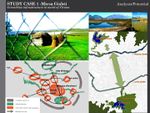 Mirsa Gishti_slide 1
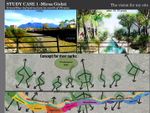 Mirsa Gishti_slide 1
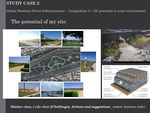 Bahman Nahri_slide 1
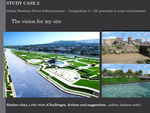 Bahman Nahri_slide 2
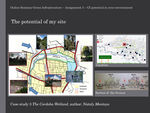 Nataly Montoya_slide 1
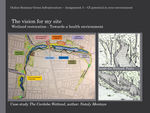 Nataly Montoya_slide 2


